
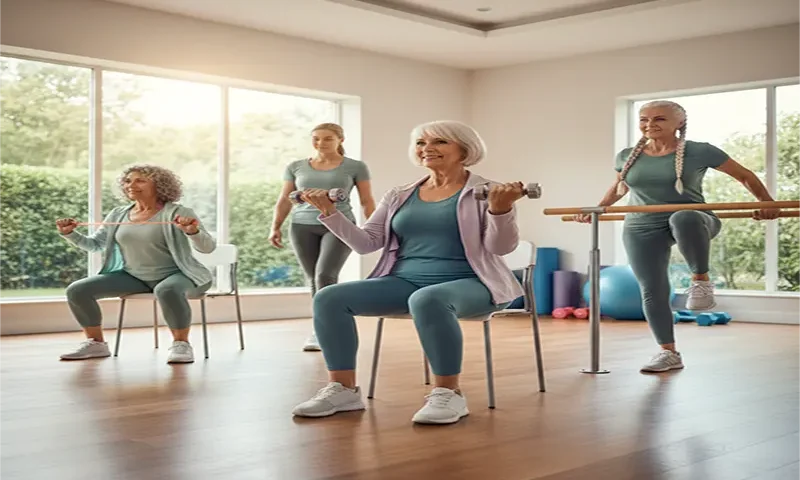
Strength is often mistaken for a young person’s game—a pursuit of heavy iron and high-intensity sweat. However, for women over 70, strength training isn’t about vanity or athletic competition; it is the ultimate tool for functional longevity. It is the difference between needing assistance to get out of a chair and standing up with ease.
It is a common myth that the body becomes too fragile for resistance work after a certain age. In reality, the “fragility” we often associate with aging is frequently a result of disuse rather than the passage of time itself. By engaging in low-impact strength training, women in their 70s and beyond can reclaim their physical independence, improve their mood, and protect their bodies against the specific challenges that come with the golden years.
The Science of Aging Gracefully
As we age, our bodies undergo physiological changes that can impact our quality of life if left unaddressed. Two of the most significant concerns for women over 70 are sarcopenia and osteoporosis.
- Sarcopenia: This is the age-related loss of skeletal muscle mass and strength. After age 30, muscle mass begins to decline by approximately 3% to 8% per decade, and this rate accelerates after 60. Strength training signals the body to preserve and rebuild these fibers, ensuring you maintain the power needed for daily tasks.
- Bone Density: Hormonal shifts post-menopause often lead to a decrease in bone mineral density. Strength training creates a healthy “stress” on the bones, which stimulates osteoblasts—the cells responsible for bone synthesis.
- Balance and Coordination: Beyond muscle and bone, resistance exercises improve the neuromuscular connection—how well your brain communicates with your limbs. This is the single most effective way to prevent falls, which are a leading cause of injury in seniors.
Safety First: Laying the Foundation
Before embarking on a new fitness journey, safety must be the priority. Physical activity should be empowering, not injurious.
- Consult Your Physician: Always speak with your doctor before starting a new regimen, especially if you have pre-existing conditions like arthritis, heart disease, or high blood pressure.
- The 10-Minute Warm-Up: Cold muscles are more prone to strain. Start with gentle movement—marching in place, shoulder circles, or a light walk—to increase blood flow.
- Identify “Bad Pain”: Muscle fatigue (a dull ache or “burn”) is a sign of progress. Sharp, stabbing, or localized pain in a joint is a signal to stop immediately.
Top 5 Low-Impact Exercises for Women Over 70
The following exercises focus on “compound movements”—those that mimic real-life actions like sitting down, reaching for a shelf, or picking up an object.
1. Sit-to-Stands (The Functional Squat)
This is arguably the most important exercise for maintaining independence. It builds strength in the quads, hamstrings, and glutes.
- The Form: Sit on a sturdy, armless chair with feet flat on the floor, hip-width apart. Lean slightly forward, engage your core, and push through your heels to stand up completely. Slowly lower yourself back down to the seat with control.
- The Benefit: This strengthens the muscles required for getting in and out of cars, chairs, and bathtubs.
- Modification: If standing is difficult, use a chair with armrests and use your hands to assist the push until your legs get stronger.
Pro-Tip: Don’t “plop” back down. The lowering phase (the eccentric) is where much of the muscle-building happens. Count to three as you sit.
2. Wall Push-Ups (Upper Body Strength)
Standard floor push-ups can be hard on the wrists and shoulders. The wall version provides the same chest and triceps benefits with significantly less joint strain.
- The Form: Stand facing a wall, slightly more than arm’s length away. Place your hands on the wall at shoulder height and width. Lean in toward the wall by bending your elbows, then push back to the starting position.
- The Benefit: Enhances the ability to push doors open and catch yourself if you stumble.
- Modification: To make it harder, move your feet further from the wall. To make it easier, stand closer.
Pro-Tip: Keep your body in a straight line from head to heels. Don’t let your hips sag toward the wall or your “bottom” stick out.
3. Bird-Dog (Core and Balance)
A strong core is the “anchor” for the rest of the body. This exercise improves stability without requiring high-impact movement.
- The Form: Start on your hands and knees (use a yoga mat for knee comfort). Simultaneously reach your right arm forward and your left leg back. Hold for two seconds, then return to center and switch sides.
- The Benefit: This targets the lower back and abdominals while forcing the brain to coordinate opposite sides of the body.
- Modification: If being on all fours is painful, perform this standing while holding onto a kitchen counter for balance, extending one arm and the opposite leg.
Pro-Tip: Focus on length, not height. You want your arm and leg to be parallel to the floor, not pointing toward the ceiling.
4. Resistance Band Bicep Curls (Joint-Friendly Tension)
Dumbbells can sometimes feel “clunky.” Resistance bands provide a smooth, constant tension that is very kind to aging elbows and wrists.
- The Form: Stand in the middle of a long resistance band, holding one end in each hand. Keep your elbows tucked into your ribs and curl your hands toward your shoulders.
- The Benefit: Builds the arm strength necessary for carrying groceries or lifting a grandchild.
- Modification: This can easily be done while seated. Simply tuck the band under your feet while sitting in a chair.
Pro-Tip: Keep your wrists “stiff” and straight. Letting them flop backward can cause unnecessary strain.
5. Glute Bridges (Posterior Chain Health)
The “posterior chain” (lower back, glutes, and hamstrings) is often the most neglected area, yet it is vital for walking posture.
- The Form: Lie on your back with knees bent and feet flat on the floor. Squeeze your glutes and lift your hips toward the ceiling until your body forms a straight line from knees to shoulders. Hold, then lower slowly.
- The Benefit: Relieves lower back pain by strengthening the glutes and improves hip mobility.
- Modification: If getting on the floor is a barrier, you can perform this on a firm mattress.
Pro-Tip: Imagine there is a walnut between your glutes that you are trying to crack at the top of the movement.
Nutrition and Recovery: The Hidden Partners
Exercise is the “architect,” but nutrition is the “bricks and mortar.”
- Protein is Key: For women over 70, protein requirements actually increase because the body becomes less efficient at processing it. Aim for a source of protein at every meal—such as Greek yogurt, eggs, lean poultry, or beans—to help repair the muscles you’ve worked.
- Hydration: Thirst signals can weaken with age. Drink water throughout your workout, even if you don’t feel thirsty.
- Rest: Muscle isn’t built during the workout; it’s built during the 48 hours afterward. Never work the same muscle groups two days in a row.
Reclaiming Your Vitality
Strength training at 70 isn’t about turning back the clock; it’s about making the most of the time you have. By dedicating just 20 to 30 minutes, two or three times a week, to these low-impact movements, you are investing in your future self. You are choosing a life of movement, confidence, and independence. Remember, the goal isn’t to be “the best”—it’s simply to be better than you were yesterday.

