
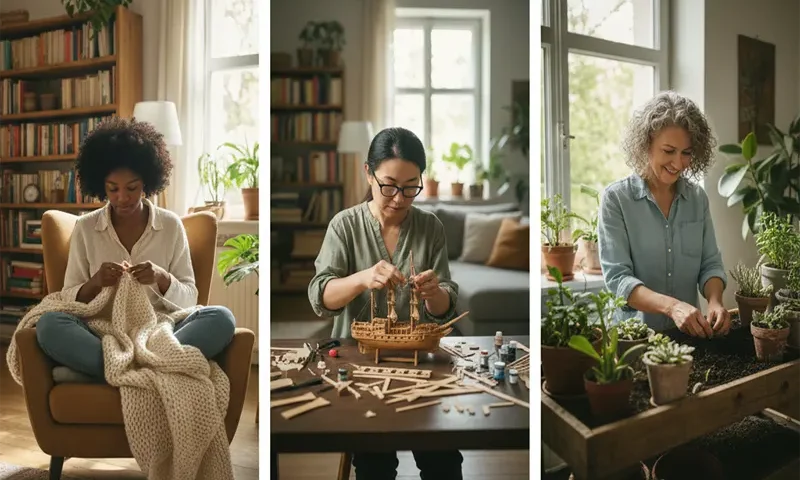
In our hyperconnected era, many of us live in a state of chronic “digital overload.” We are perpetually tethered to screens, navigating a constant stream of notifications, emails, and algorithmic feeds. This isn’t just a matter of feeling busy; it is a physiological state. Constant digital interaction keeps our autonomic nervous system (ANS) locked in a state of sympathetic activation—the “fight-or-flight” response—which is designed for acute survival, not for navigating an endless inbox.
When we move away from screens toward tactile, analogue hobbies, we aren’t just “disconnecting”; we are actively signaling to our nervous system that it is safe to shift into a parasympathetic state—the “rest-and-digest” mode essential for recovery, emotional balance, and long-term health.
The Neurobiology of Analogue Engagement
Why does knitting, sketching, or gardening feel so different from scrolling through a social feed? The answer lies in how our bodies process the physical world versus the digital one.
The Vagal Brake
The vagus nerve is the primary conduit of the parasympathetic nervous system, responsible for slowing our heart rate and lowering blood pressure. Analogue activities often involve rhythmic, repetitive movements—such as the clicking of knitting needles or the steady stroke of a paintbrush. These rhythmic actions function as a “vagal brake,” sending signals of safety from our body to our brain, which actively tames the sympathetic nervous system.
Flow States and the “Attentional Blink”
Digital media often triggers a phenomenon known as the “attentional blink,” where our focus is fragmented by constant sensory shifts. In contrast, analogue hobbies facilitate “flow states”—a mental state of deep absorption where self-consciousness fades and time seems to distort. During flow, our brain shifts away from the executive-heavy processing of our prefrontal cortex, allowing the mind to rest and replenish depleted cognitive resources.
Sensory Grounding
Analogue engagement demands sensory presence. Whether it is the weight of a physical book in your hands, the smell of damp earth in a garden, or the texture of clay, these physical inputs ground the brain in the “here and now.” By focusing on tactile sensations, we pull the mind away from the anxiety-inducing “what-ifs” of the future or the rumination of the past, effectively tethering our nervous system to the present moment.
The Transition Framework: A Low-Friction Roadmap
Transitioning away from screens can feel jarring if you try to do it all at once. Instead, approach it as a gradual reclamation of your time and focus.
1. Start with Micro-Habits
Don’t aim for a weekend-long digital detox. Use the “10-Minute Analogue Rule”: commit to just ten minutes of a screen-free hobby immediately upon finishing your workday. This acts as a “buffer zone” between digital professional demands and your personal life.
2. Implement “Digital Friction”
If your phone is easily accessible, you will pick it up. Create physical barriers: leave your phone in another room while you engage in your hobby. Keep your analogue tools—your sketchbook, gardening gloves, or puzzle—in plain sight, ready to be picked up the moment the urge to scroll arises.
3. Categorize by Need
Not every hobby meets the same nervous system need. Use this matrix to help you choose the right activity based on your current state:
| Nervous System Need | Type of Hobby | Examples |
| Anxiety Reduction | Kinetic/Repetitive | Knitting, Crochet, Hand-sewing, Whittling |
| Emotional Expression | Creative/Expansive | Painting, Sketching, Creative writing, Playing an instrument |
| Grounding | Nature-Based | Gardening, Hiking, Bird watching |
| Cognitive Reset | Logical/Structural | Puzzles, Model building, Board games |
The “Analogue Resilience” Toolkit
To make your transition easier, stock your “resilience kit” with low-barrier activities. These don’t require immense skill, just a willingness to be present:
- Physical Journaling: Use a notebook and pen to “brain dump” at the end of the day. The physical act of writing slows down the cognitive process, allowing you to externalize stress rather than carrying it.
- Hand-Copying: Copying passages from a favorite book or poetry can be a rhythmic, calming activity that focuses the mind without the pressure of creative output.
- Tactile Crafts: Working with clay or fiber-based crafts provides high-quality sensory feedback that is inherently soothing.
- Analogue Photography: Using a film camera forces you to be deliberate, slowing down the act of “capturing” a moment to observation and patience.
Reclaiming Human Capacity
Transitioning to analogue hobbies is not a rejection of technology; it is a restoration of human capacity. By choosing activities that require focus, presence, and tactile interaction, you are providing your nervous system with the inputs it needs to achieve homeostasis. You are trading the frantic, dopamine-fueled “scroll” for the slow, steady satisfaction of creation and observation. Start small, be consistent, and observe how your internal landscape begins to shift from a state of constant alert to one of quiet, resilient calm.

