
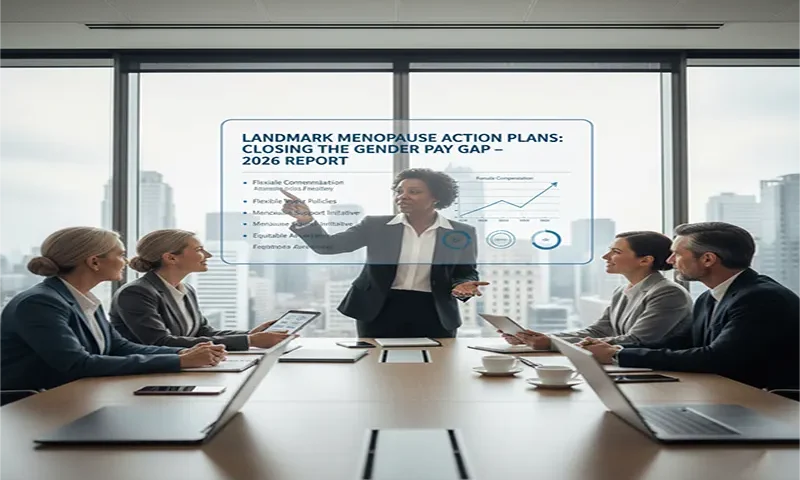
By 2026, the corporate narrative around women’s health has undergone a seismic shift. For decades, the “Menopause Cliff”—the career stage, typically in a woman’s 40s or 50s, where symptoms often coincide with the transition into senior leadership—was treated as a private health matter. Today, however, it is recognized as a pivotal economic concern. Landmark Menopause Action Plans are no longer just “nice-to-have” wellness perks; they are essential economic strategies being deployed to stop the mid-career talent drain and actively close the gender pay gap.
The Economic Cost of Symptom Neglect
The gender pay gap is rarely the result of a single event; it is the cumulative effect of the “broken rung” in the corporate ladder. Research consistently shows that mid-career is where women are most likely to slow their progression, opt out of promotion opportunities, or leave the workforce entirely. In 2026, the data is unequivocal: a significant driver of this attrition is unmanaged menopause symptoms.
When organizations fail to support women during this transition, they lose decades of institutional knowledge, leadership potential, and productivity. Replacing senior-level talent is exponentially more expensive than retaining it. By failing to accommodate the natural physiological changes of menopause, companies are inadvertently funneling their most experienced female talent out of the pipeline, which directly widens the pay gap by thinning the ranks of women in high-paying senior roles.
The Anatomy of a Landmark Action Plan
A “Gold Standard” 2026 Menopause Action Plan moves far beyond superficial policy statements. These frameworks are integrated, measurable, and designed to foster long-term retention.
1. Flexibility by Design
True support acknowledges that symptoms can be erratic. Landmark plans implement hybrid work models that allow for “symptom-responsive” adjustments—giving employees the autonomy to shift hours or work remotely when symptoms, such as debilitating fatigue or brain fog, are at their peak.
2. Environmental Adjustments
Companies are recognizing that the physical workplace often exacerbates symptoms. Gold-standard plans mandate climate-controlled environments, accessible cooling stations, and ergonomic workstations that mitigate common physical discomforts.
3. Cultural Shift through Accountability
Policy is useless without culture. In 2026, successful organizations have eliminated stigma by:
- Mandatory Manager Training: Managers are equipped to have empathetic, informed conversations without medicalizing the experience.
- Menopause Champions: Designated internal advocates provide confidential peer support and act as a bridge between staff and HR.
Outcomes and ROI: The Business Case for Inclusion
The positive ripple effects of these policies are becoming increasingly clear in 2026. Organizations that have adopted structured Action Plans report significantly higher retention rates among mid-to-senior level women. Furthermore, these policies are having a cultural “halo effect.” When an organization normalizes the menopause transition, it signals to younger cohorts of women that they have a sustainable future within the company, thereby strengthening the entire talent pipeline.
Menopause Action Plan ROI (Estimated Business Impact)
| Investment Area | Direct Cost | Long-Term Retention & Economic Gain |
| Manager Training | Moderate (Time/Resource) | Reduced turnover & higher engagement. |
| Workspace Adjustments | Low (Environmental/Desk) | Increased productivity & comfort. |
| Clinical/OH Support | Moderate (External Provider) | Reduced absenteeism & health insurance claims. |
| Culture Building | Low (Internal Time) | Greater employer brand & diversity goals. |
This is a strategic investment in institutional knowledge, protecting the business against the massive costs of recruitment, onboarding, and lost leadership.
Dismantling the Broken Rung
Menopause inclusivity is a critical pillar of true gender parity. By dismantling the “broken rung” in the corporate ladder, landmark action plans ensure that a woman’s professional trajectory is not interrupted by a natural life stage. As we move further into 2026, it is clear that organizations that treat menopause as a strategic workplace issue rather than a private health burden will be the ones that attract, retain, and develop the most resilient leadership teams. True gender parity requires not just equality of opportunity, but equity in support, ensuring every employee has the environment they need to thrive, at every stage of their career.

