
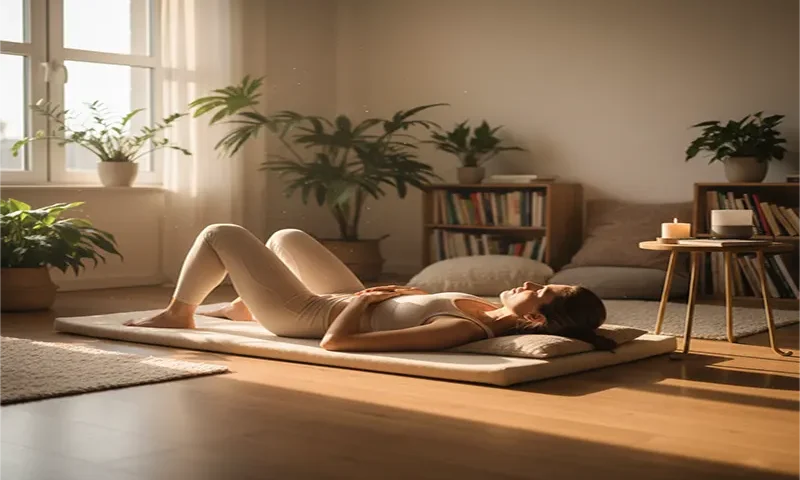
Living alone is often framed through the lens of independence and autonomy, but neurologically, it is a unique state. Human beings are biologically wired for “co-regulation”—the process by which our nervous systems stabilize through the presence, touch, and tone of others. When we live alone, that external “anchor” is absent, which can lead to a sense of being “unmoored.”
For many, this manifests as a low-grade state of high alert, a chronic “low-battery” fatigue, or a feeling of being untethered. Somatic exercises provide a “bottom-up” approach to this challenge. By working with the body first, we can signal to our brain that we are safe, anchored, and capable of self-regulation, turning a solo home into a personal sanctuary.
The Neurobiology of Living Alone
Our nervous system is governed by the autonomic nervous system (ANS), which oscillates between the sympathetic (the “fight or flight” response) and the parasympathetic (the “rest and digest” state). When we lack the stabilizing presence of others, our amygdala—the brain’s threat-detection center—can become hyper-vigilant, scanning for potential issues because we feel we are the only ones “on watch.”
Conversely, prolonged isolation can lead to a “dorsal vagal shutdown,” a state of immobilization or numbness, where the nervous system essentially goes into power-saving mode because it perceives a lack of resources. The key to regulation is the vagus nerve, the body’s primary highway for calming signals. By stimulating this nerve through movement and touch, we can manually shift our biology from a state of threat or collapse back into a state of safety.
The “Safety-First” Somatic Toolkit
You do not need a gym or equipment to practice these techniques. These are designed to be performed in the “mundane” spaces of your home—the kitchen, the bedroom, or even your workspace.
1. Grounding (Stability)
When you feel “floaty” or anxious, your nervous system has lost its sense of downward pressure.
- The How: Stand with feet hip-width apart. Begin to intentionally tap each heel into the floor, one at a time, feeling the vibration travel up your calves and into your hips. Focus on the sensation of the floor meeting your feet.
- Why: This signals to the brain that you have a physical base.
2. Orienting (Safety Check)
This exercise convinces your amygdala that your environment is secure.
- The How: Stand in a room and slowly turn your head and neck to look at the far edges of your space. Let your eyes land on objects of interest. Soften your gaze. Look behind you, then slowly back to the front.
- Why: It tells the primitive brain, “I have looked at my perimeter, and I am safe.”
3. Self-Soothing (Touch)
You can mimic the calming effect of an external embrace through intentional touch.
- The How: Cross your arms over your chest and place your hands on your shoulders. Squeeze gently, alternating your hands like a butterfly flapping its wings. Alternatively, place one hand on your heart and one on your belly, and just breathe into your palms.
- Why: Gentle, rhythmic touch releases oxytocin, the body’s natural “anti-anxiety” hormone.
4. Discharge & Release (Movement)
Isolation can leave us holding onto excess energy that would usually be “worn off” through social interaction.
- The How: Simply shake your hands, your arms, and your legs. Start small and then increase the intensity, as if you are trying to shake off water. Let your jaw go slack while you do this.
- Why: This “shivering” motion is how mammals naturally discharge high-stress energy from the nervous system.
5. Vocal Stimulation (Vagus Nerve)
- The How: Take a deep breath and, on the exhale, make a low, vibrating “Voo” sound. Feel the vibration in your chest and throat.
- Why: This directly stimulates the vagus nerve, which runs through the throat, physically forcing the body into a parasympathetic state.
Building a “Solo-Care” Routine
Don’t treat these as “homework”; treat them as “maintenance.”
- Upon Waking: Before you check your phone, do the “Orienting” scan in your bedroom to start the day feeling safe.
- During Cooking: While waiting for the kettle to boil, use the “Voo” sounding or foot-tapping to stay grounded.
- Before Bed: Use self-soothing hand-to-heart touch to help the body transition into sleep, signaling that the “watch” is over and it is time to rest.
Quick-Regulation Checklist
| Feeling | Recommended Practice | Time Required |
| Anxious/Racing | Grounding (Heel tapping) | 1–2 Minutes |
| Disconnected/Numb | Discharge (Shaking) | 30 Seconds |
| Overwhelmed | Orienting (Room scan) | 1 Minute |
| Lonely/Sad | Self-Soothing (Heart touch) | 2 Minutes |
Becoming Your Own Safe Container
Living alone is a profound opportunity to become your own primary caregiver. When you practice these somatic exercises, you are not “fixing” yourself; you are engaging in the essential biological work of creating a safe internal home. By manually regulating your nervous system, you turn your home into a space that nurtures you, allowing you to move through your day with a grounded, calm, and resilient nervous system.

